Brace for (Private) Impact
Why easy money isn't coming back, why venture capital is expensive in a market without depth, and what founders need to do next.
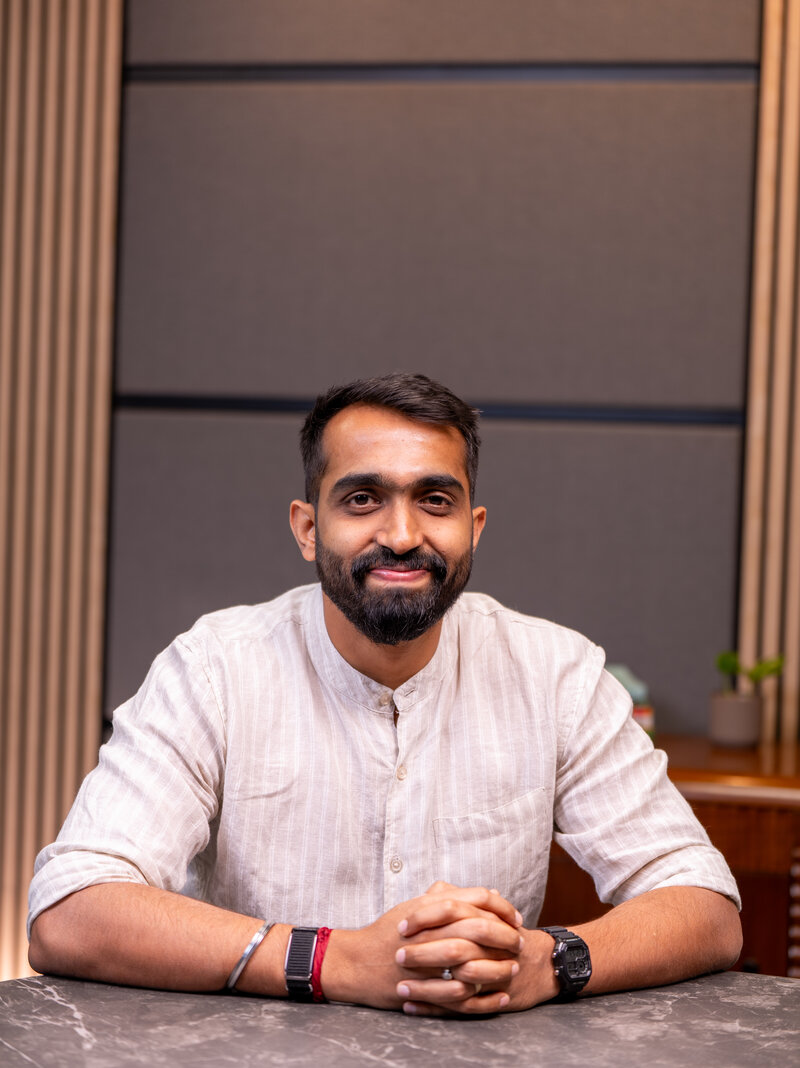
I grew up by the River Seetha in Udupi. After studying computer science at RVCE (2014), I started my career in financial research at D.E. Shaw India and later completed my MBA at the University of Calgary.
Along the way, I built and shut down two small businesses—a textbook delivery service in Bangalore and a student housing venture in Canada. Dealing firsthand with working capital cycles, vendor terms, and thin operating margins taught me more about business mortality than any financial model.
Since 2020, I have been at Zerodha, where I lead private market investments at Rainmatter and work on long-term ecological and rural livelihood initiatives through the Rainmatter Foundation.
Step into the Governor's chair across 8 Indian macro eras—from the 1991 gold airlift and 2013 taper tantrum to a 2027 AI shock. Play the streamlined 1-Decision-Per-Turn Edition (one clear policy call every 6 months) or the full 5-lever central bank terminal.
Why easy money isn't coming back, why venture capital is expensive in a market without depth, and what founders need to do next.
Reflections from meeting entrepreneurs, incubators, and policymakers in Andhra Pradesh—and why early-stage investing is ultimately a bet on people and time.
A personal reflection on imposter syndrome, communication, and the power of luck.
Why market timing, patience, and founder endurance matter more than financial projections in early-stage investing.
Why global trade friction is a wake-up call for India to double down on domestic digital and physical infrastructure.
Key policy, tax, and regulatory asks from the Indian startup and venture ecosystem ahead of the Union Budget.
Industry (BFSI, Telecom, Mfg/ER&D, Retail) and geographical (Americas, Europe, India/RoW) revenue split across TCS, Infosys, HCLTech, Wipro, Tech Mahindra, and LTIMindtree.
How domestic institutions and households (27.4%) overtook foreign investors (16.5%) for the first time in 25 years.
Nine landmark deals across Yes Bank, RBL, Shriram Finance, Federal Bank, IDFC First, and the IDBI Bank privatisation process.
Why ₹8,415 Cr in Additional Tier-1 bonds was wiped out before equity, the April 2026 Supreme Court judgment, and SEBI's ₹1 Cr rule.
Interactive 16:9 slide decks built from NSE valuation archives, Union Budget receipt documents, and SEBI DRHP filings.
For the first time since the Industrial Revolution, India beats the US on both labor costs and electricity prices. With daylight solar at ₹2.50/kWh and firm 24x7 solar-plus-storage at ₹5.25/kWh—cheaper than new coal—cheap power stops being just a climate goal and becomes a core industrial advantage.
A detailed month-by-month scenario tracing how coding agents could evolve into autonomous AI researchers over the next 30 months. Worth reading both for its concrete look at compute and power bottlenecks, and for how it grounds frontier technology in everyday bureaucracy and geopolitics.
A breakdown of Marc Lore's $9B food-tech roll-up—and a good lens on why high-capex kitchen robotics and multi-brand food delivery work differently in the US ($45 average orders) than in India (₹300 average orders and low kitchen labor costs).
In venture capital, chasing 'access' to hot, consensus deals is usually a trap. The best founders and investors learn faster from direct, real-world feedback than from polished credentials.
For a century, companies extracted profits first and gave back through charity later. The most enduring businesses of the next 50 years will build models where unit economics improve only when customer and community outcomes improve.
We are wired to react to vivid, emotional threats while ignoring slow-moving statistical risks. In markets as in technology, abstract risks on a spreadsheet rarely feel real until the damage is already done.
As AI makes generating code and content nearly free, value shifts to what cannot be automated: trust. Durable moats will belong to businesses built on skin in the game, reputation, and clear accountability.
Instead of keeping interest income on reserves like Tether or Circle, Open USD shares reserve yield and network ownership with the platforms distributing it—a modern take on how Visa was originally built as a member-owned network.
When software can take a user from prompt to output in seconds, traditional onboarding funnels stop mattering. The real bottleneck shifts from building features to having clear product judgment.
Most investment mistakes come from boredom and action bias rather than a lack of IQ. Like carmakers reducing defects on an assembly line, long-term compounding comes from systematically eliminating unforced errors.
Notes from a 1955 archival interview with Benjamin Graham: why Wall Street consensus is no better than a coin flip, why mechanical strategies like dollar-cost averaging fail when human emotions take over, and why credit leverage—not high prices alone—causes market crashes.
Why chasing logo counts in AI software is misleading when inference costs pull gross margins down to ~50%, and how to separate temporary 'experimental' budgets from sticky annual contracts.
The split between 'Neobranches' (polished apps renting banking APIs with thin margins) and 'Hyperbanks' (firms that own their regulatory licenses and clear directly at the central-bank and depository level).
A clear breakdown of how reserving credit-on-UPI for RuPay pushed its share of new cards past 30%, and how the 0% MDR rule on transactions under ₹2,000 squeezes issuing bank margins.
Even if AI labs stopped training new models today, it would take years for companies to absorb what existing models can already do. The bottleneck is no longer raw model intelligence, but workflow design and human judgment.
Kris Abdelmessih breaks down position sizing under uncertainty—why even a great bet can ruin you if you size it too aggressively, and why survival always comes before maximizing returns.
How Nubank is entering the U.S. market through partner banking rails and using low-cost cross-border settlement to connect everyday retail banking with global transfers.
A sobering look at how generative AI wiped out a 40,000-person freelance writing economy in Nairobi almost overnight—and a reminder of how fragile purely transactional digital work has become.
Anthropic CEO Dario Amodei makes the case for tying frontier AI deployment speed to measurable safety benchmarks rather than racing blindly ahead.
Why public markets often price in a 15–25% discount when second-generation heirs take over from founders—and how hard it is to pass down founder-level urgency and cost discipline.
A clear look at why momentum persists across centuries of market data, and how simple index funds quietly act as long-term trend-following machines.
Scaling without external capital or marketing spend, managing tail risk, and long-term capital allocation.
Separating true product-to-problem fit from subsidized top-line growth at Seed and Series A.
Evaluating founder-market fit, earned insights from the field, and early cap-table mistakes.
Hiring the first ten engineers and operators, structuring ESOPs, and keeping teams together.
Testing for complementary skills, stress-testing values, and structuring equity splits.
Private capital flows into India, domestic family offices, and public-market exit liquidity.
13 Indian financial products (stocks, mutual funds, FDs, SGBs, REITs, NPS, ULIPs) stripped down to what you actually own, post-tax returns, and the hidden catch—in English, Kannada, Hindi, Tamil, Telugu, and Marathi.
Interactive RBI policy game across 8 historical and future macro eras—make one clear monetary policy call per turn (or switch to the full 5-lever desk) under supply shocks and Black Swans.
Parses corporate financial statements to compute Altman Z-Scores, Piotroski F-Scores, and DuPont decompositions in under two minutes.
Helps founders and investment teams review Indian fundraising documents—flagging non-standard clauses across Term Sheets, SHAs, and SPAs.